

Realistic Weight Loss Results for Women Over 40: A Six-Month Coaching Guide
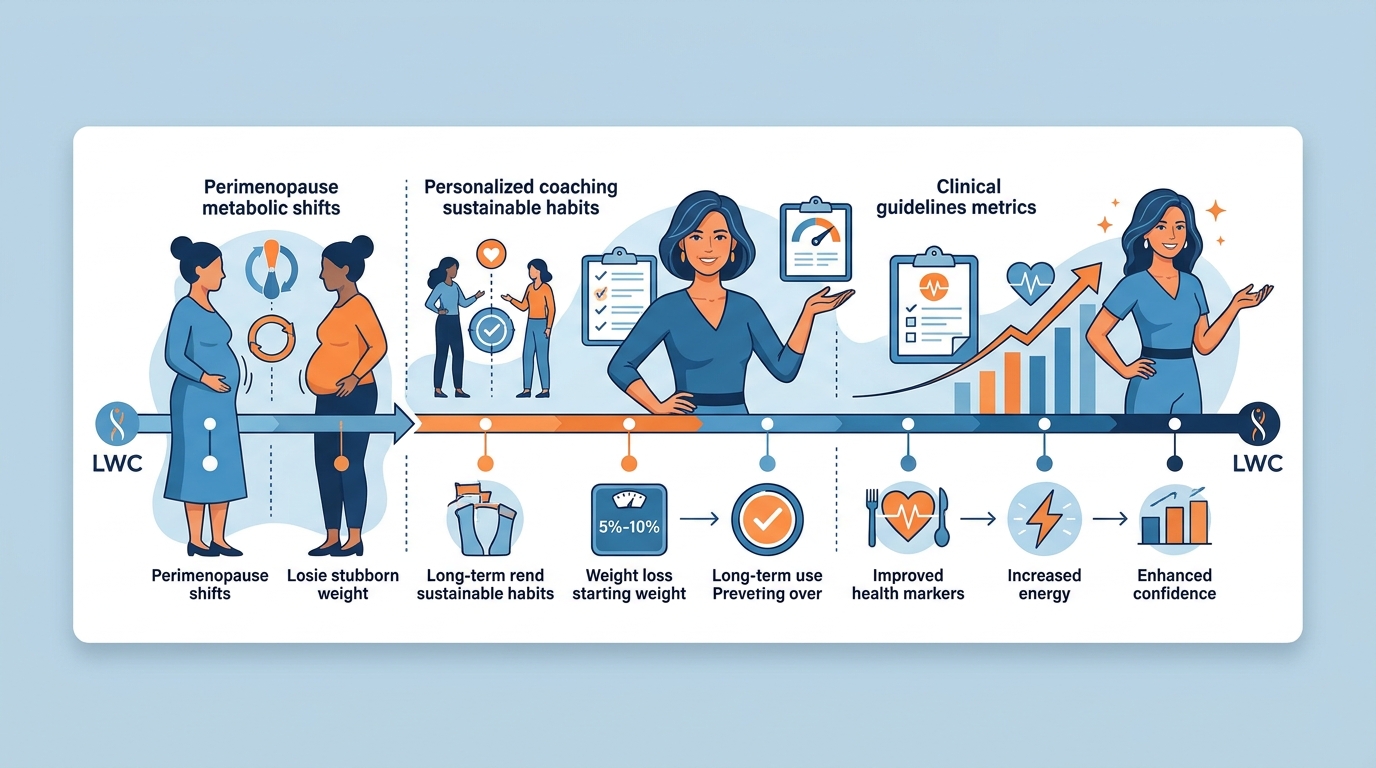
Women over 40 can realistically expect to lose 5% to 10% of their starting weight within six months of personalized coaching. This target aligns with clinical guidelines and accounts for the metabolic shifts of perimenopause. Life Warrior Coaching focuses on sustainable habits rather than rapid, unsustainable drops. This approach ensures that the weight you lose stays off.
The Clinical Standard for Sustainable Loss
Health professionals recommend losing 5% to 10% of your initial weight over the course of about 6 months, according to the National Heart, Lung, and Blood Institute. This benchmark is not arbitrary. It represents the threshold where significant health markers, such as blood pressure and cholesterol, begin to improve. For women over 40, this pace is critical because it allows the body to adapt to new nutritional inputs without triggering a defensive metabolic slowdown.
Obesity interventions typically result in early rapid weight loss followed by a weight plateau and progressive regain, as noted in research published in PMC. The goal of personalized coaching is to flatten that plateau. By focusing on behavior change rather than just calorie restriction, coaches help clients navigate the weeks where the scale stops moving. This is where most traditional diets fail, but where coaching succeeds.
Why Age Changes the Weight Loss Equation
Metabolic adaptation is a physiological response where the body reduces its energy expenditure in response to weight loss. This is particularly pronounced in women over 40 due to declining muscle mass and hormonal changes. A study on weight loss trajectories found that participants aged under 40 achieved a mean weight loss of 4.3%, while older individuals achieved a mean of 4.7% at 12 months, according to a cohort study in PMC. This suggests that age alone does not dictate failure, but the strategy must be adjusted.
Personalized coaching accounts for these individual differences. Instead of a one-size-fits-all plan, a coach adjusts nutrition and movement based on your specific biomarkers and lifestyle. This precision is what allows women over 40 to achieve results comparable to younger demographics. The key is not to fight your biology, but to work with it through targeted interventions.
The Role of Self-Efficacy in Long-Term Success
Eating self-efficacy is the confidence in one's ability to control eating behavior in the face of internal and external cues. Research indicates that both eating and physical activity self-efficacy are predictive of dietary intake and weight change within a behavioral weight loss intervention, as detailed in a study in PMC. When women feel capable of handling social pressures or stress without breaking their plan, they are more likely to maintain their results. Coaching builds this confidence through repeated small wins and structured support.
Targeted behavior coaching can help people learn and practice a range of weight-loss strategies, according to Harvard Health. This is not just about telling you what to eat. It is about teaching you how to think about food and movement. Over six months, this cognitive shift becomes the foundation for lifelong health. You stop relying on willpower and start relying on systems.
Coaching Models and Engagement Metrics
Providing coaches as part of a weight management program is a common practice to increase participant engagement and weight loss success, according to a retrospective analysis in PMC. The frequency and quality of these interactions matter. Studies have shown that session durations ranging from 5 to 90 minutes, with weekly or quarterly frequency, can yield different outcomes depending on the individual's needs. Life Warrior Coaching uses weekly sessions to maintain high engagement and accountability.
Key Takeaways
- Aim for a 5% to 10% weight loss over six months, which is the clinically recommended standard for health improvement.
- Expect a plateau around weeks four to six, which is a normal part of metabolic adaptation and not a sign of failure.
- Self-efficacy, or confidence in your ability to stick to a plan, is a stronger predictor of long-term success than initial motivation.
- Personalized coaching adjusts for age-related metabolic changes, allowing women over 40 to achieve results comparable to younger groups.
- Combining human coaching with digital tools can significantly enhance weight loss outcomes and engagement.
- Long-term maintenance is more challenging than initial loss, requiring a shift from a diet mindset to a lifestyle mindset.
Frequently Asked Questions
How much weight can I realistically lose in six months?
Why does weight loss slow down after the first few weeks?
This is due to metabolic adaptation. Your body adjusts to the new energy intake by lowering its resting metabolic rate. Coaching helps you navigate this phase by adjusting your plan and maintaining motivation.
Is personalized coaching better than a standard diet plan?
Yes, because it accounts for individual differences in metabolism, lifestyle, and psychology. Standard plans often fail because they do not adapt to the user's specific barriers and preferences.
What role does mindset play in weight loss for women over 40?
Mindset is crucial. Building self-efficacy helps you handle stress and social situations without breaking your plan. Coaching focuses on rewiring these mental patterns for long-term success.
Can I maintain my weight loss after the six-month program ends?
Yes, if you have developed sustainable habits and systems. The goal of coaching is to teach you how to manage your weight independently, so you do not need to rely on the coach forever.
How often should I meet with a coach?
Weekly meetings are generally recommended for the first six months to ensure high engagement and accountability. This frequency allows for timely adjustments to your plan as needed.
What is the Triple R Method?
The Triple R Method is a framework used by Life Warrior Coaching that involves Resetting the Body, Releasing the Weight, and Rewiring the Mind. It addresses the physical, nutritional, and psychological aspects of weight loss.