

How to Keep Weight Off After Your Six Month Coaching Program Ends
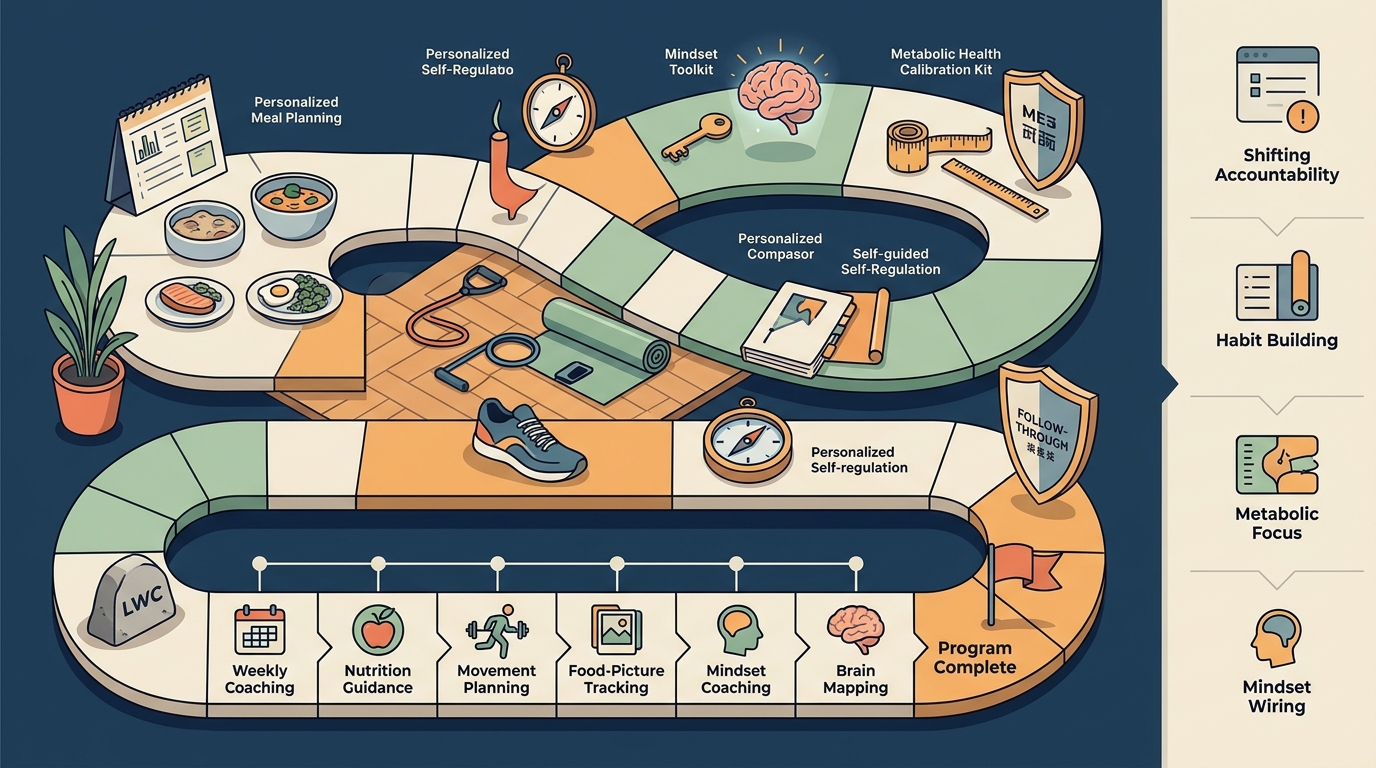
Keeping weight off after a six-month coaching program ends requires shifting from external accountability to internal self-regulation. You must build sustainable habits that function without daily check-ins. Life Warrior Coaching prepares women over 40 for this transition by focusing on mindset rewiring and metabolic health, ensuring progress lasts long after the formal program concludes.
The Science of Long-Term Maintenance
Weight maintenance is a distinct physiological and psychological challenge compared to initial weight loss. Metabolic adaptation is the process where the body lowers its energy expenditure in response to weight loss, making maintenance harder than losing. Research indicates that individuals who complete structured weight-loss programs often maintain a significant portion of their lost weight over time. A meta-analysis of US studies found that five years after completing such programs, the average individual maintained a weight loss of greater than 3 kg PubMed. This data suggests that while some regain is common, substantial long-term success is achievable with the right strategies.
The implication for coaching clients is that the final months of a program are critical for establishing these maintenance behaviors. If you rely solely on the coach's guidance, the system collapses when they step back. You must internalize the decision-making process. This is why Life Warrior Coaching emphasizes the "Rewire the Mind" phase of its Triple R Method. By addressing the psychological roots of overeating, clients build the resilience needed to handle life's stressors without reverting to old habits.
Building a Self-Sustaining Routine
Transitioning out of a coaching program means taking ownership of your daily actions. Behavioral consistency is the practice of performing healthy actions automatically, even when motivation fluctuates. You do not need to feel like exercising or eating well every day; you need a system that works regardless of your mood. For example, scheduling your workouts and meal prep on the same days each week creates a rigid structure that reduces decision fatigue.
Harvard Health notes that weighing yourself at least once a week, or even daily, has been shown to aid weight loss and maintenance Harvard Health. This self-monitoring acts as a feedback loop. If you see the scale creep up, you can adjust your intake or activity level immediately. In the context of Life Warrior Coaching, this aligns with the progress and biomarker tracking tools provided during the Foundation phase. Clients learn to interpret their own data, removing the need for a coach to point out trends.
Navigating Life's Disruptions
Life rarely follows a straight line. Travel, illness, and family emergencies can disrupt even the best-laid plans. Resilience is the ability to return to healthy habits quickly after a disruption without spiraling into all-or-nothing thinking. The most common mistake women make after a program ends is viewing a single "bad" day as a failure. This mindset leads to a cascade of poor choices. Instead, you must view a disruption as a temporary deviation, not a permanent change.
Health coaching is an increasingly used strategy to help adopt lifestyle changes, and its benefits extend into the maintenance phase PMC. However, you cannot have a coach in your pocket 24/7. You must develop your own crisis management plan. For instance, if you are traveling, you might pre-select healthy restaurant options or pack specific snacks. Life Warrior Coaching helps women learn to follow through when life gets hard by teaching them to identify their specific triggers and create pre-planned responses. This proactive approach prevents small slips from becoming major setbacks.
The Role of Community and Accountability
Monitoring Progress Without Obsession
Weight-loss interventions utilizing a reduced-energy diet and exercise are associated with moderate weight loss, but some regain is common PubMed. To counteract this, you must monitor your habits, not just your outcomes. If you notice your sleep quality declining or your stress levels rising, these are early warning signs that may precede weight gain. Life Warrior Coaching teaches women to track these holistic metrics, ensuring they address the root causes of potential regain before it happens. This comprehensive approach to monitoring keeps you engaged and informed.
Key Takeaways
- Metabolic adaptation makes maintenance harder than initial loss, requiring a shift to internal self-regulation.
- Self-monitoring, including regular weighing, provides a feedback loop to adjust habits before significant regain occurs.
- Resilience involves viewing disruptions as temporary deviations rather than permanent failures, preventing all-or-nothing thinking.
- Holistic progress monitoring, including sleep and stress, helps identify early warning signs of potential weight regain.
- Internalizing the mindset shifts taught during coaching is crucial for maintaining confidence and self-trust long-term.
Frequently Asked Questions
How much weight can I expect to regain after a coaching program?
Some regain is common, but studies show that individuals can maintain a significant portion of their lost weight. A meta-analysis found that five years after completing structured programs, the average individual maintained a weight loss of greater than 3 kg PubMed. Your individual results will depend on the consistency of your maintenance habits.
Do I need to continue paying for coaching to keep the weight off?
What is the most important habit to maintain after the program ends?
Consistent self-monitoring is critical. Weighing yourself regularly and tracking your food and movement helps you stay aware of your habits. This feedback loop allows you to make small adjustments before small slips turn into significant weight gain Harvard Health.
How do I handle stress without overeating?
Develop a pre-planned response to stress. Identify your triggers and create a list of healthy coping mechanisms, such as walking, meditation, or calling a friend. Life Warrior Coaching focuses on mindset rewiring to help you manage stress without relying on food as a comfort.
Is it normal to feel lost after my coach stops checking in?
How often should I weigh myself during maintenance?
Weighing yourself at least once a week, or even daily, has been shown to aid weight maintenance Harvard Health. Choose a frequency that feels manageable and does not cause anxiety. Consistency is more important than frequency.